Demica
Demica is a fintech platform used by financial institutions to manage securitisation and receivables finance operations. The project was a full rebuild of the platform, rethinking both the information architecture and core workflows to make complex financial operations more manageable day to day.
ROLE
PROBLEM
The platform had grown over many years with no sustained UX ownership. Core workflows were fragmented, data screens were hard to read, and inconsistent patterns meant users were constantly reorienting themselves. For a product where people are managing high-value financial operations, that level of friction had real consequences.
RESULTS
Core securitisation workflows became clearer and less error-prone.
Complex financial data became easier to read and act on.
Enterprise users could make decisions faster and with more confidence.
A scalable foundation for new products, regions, and features.
The Challenge
Demica's platform had been built up incrementally over many years, and it showed. UX decisions had been made in response to technical constraints rather than user needs, which left core workflows fragmented and data-heavy screens with no real hierarchy. Patterns were inconsistent enough that users couldn't build reliable habits. In a product where people are making decisions about high-value financial operations, that kind of friction isn't just frustrating, it's a genuine risk.
Redesigning it from scratch while keeping strict financial logic and regulatory constraints intact was the central challenge. The rules were non-negotiable, so the design had to accommodate them rather than work around them.
My Role & Approach
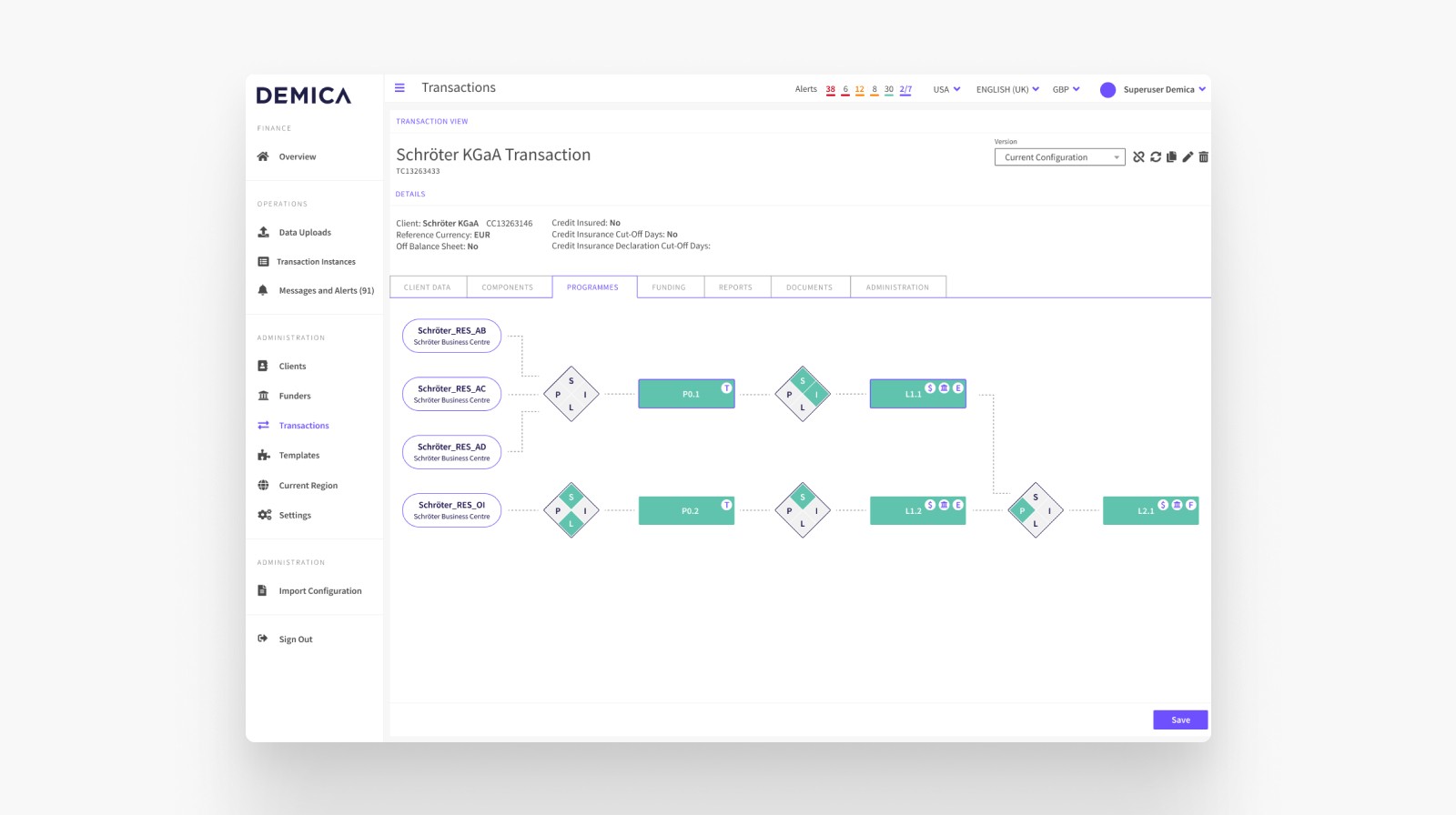
I worked closely with product managers, business analysts, engineers, and financial domain experts throughout. Before any UI work, I spent time mapping the core securitisation and receivables flows with domain experts to understand the actual business logic. That groundwork was essential because the financial rules shaped nearly every design decision downstream.
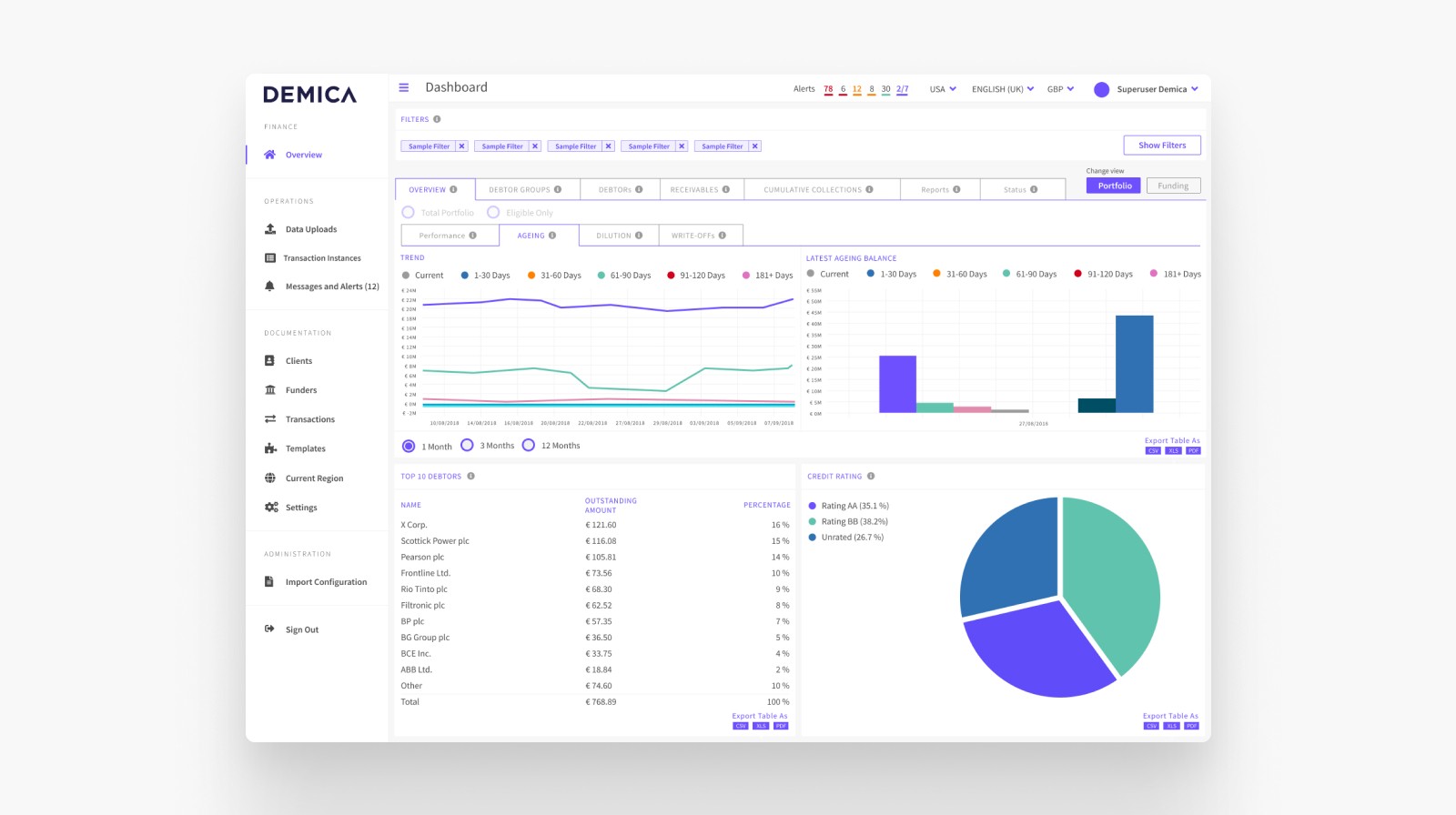
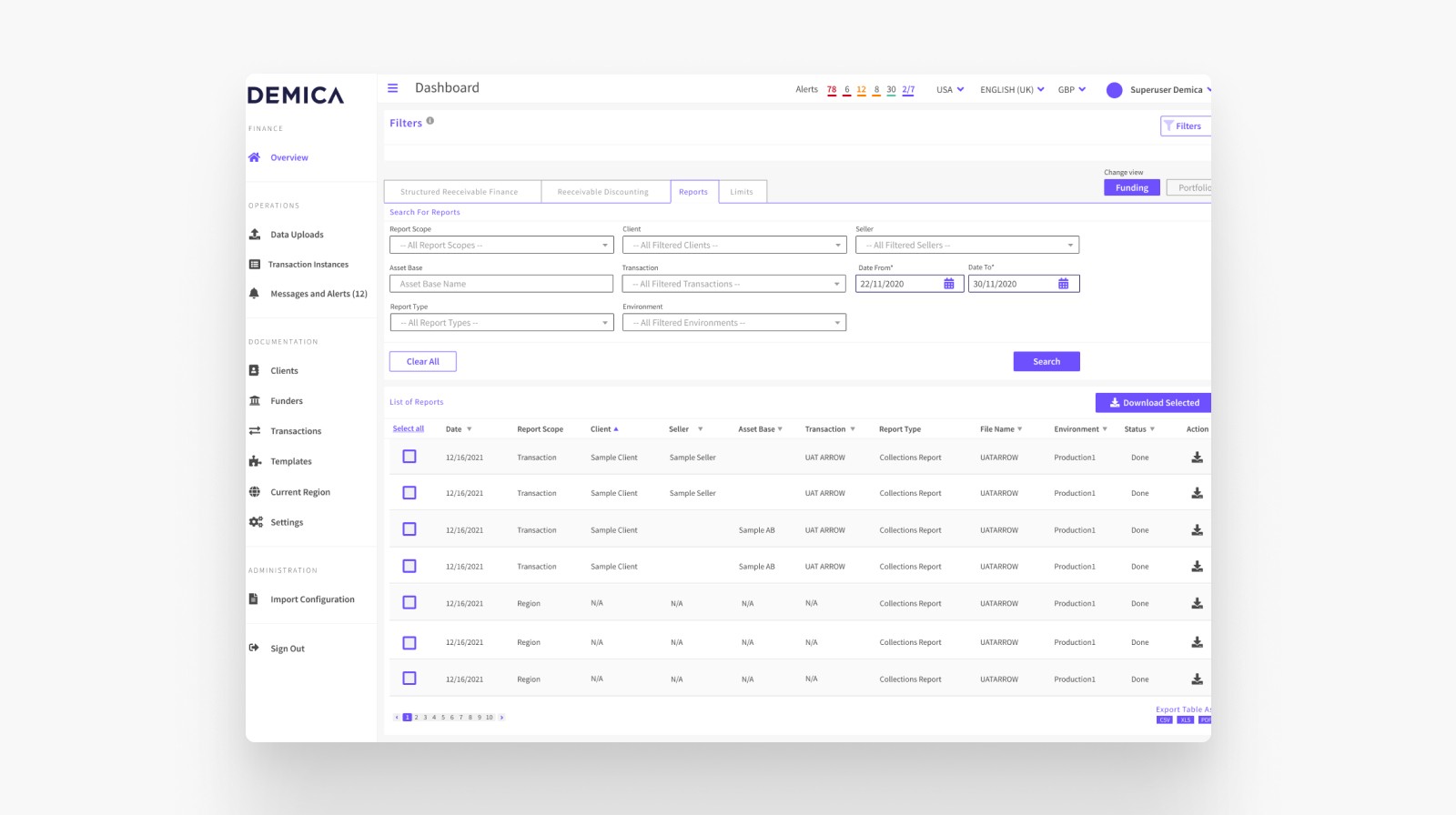
The dashboard and reporting redesign took up a significant part of the project. Users needed to assess the state of a transaction or programme quickly, without drilling through multiple screens to get there. I also worked on rebuilding the information architecture so that consistent navigation patterns let users develop habits across different parts of the platform rather than relearning each module. A scalable component system ran through all of it, giving the product team something to extend without fragmenting what we'd built.
Outcome
The platform went from something people tolerated to something they could rely on. Workflows were cleaner, the data was easier to read, and the product team had a solid base to build new features into without undoing what we'd already fixed.