Electronic Medicines Compendium
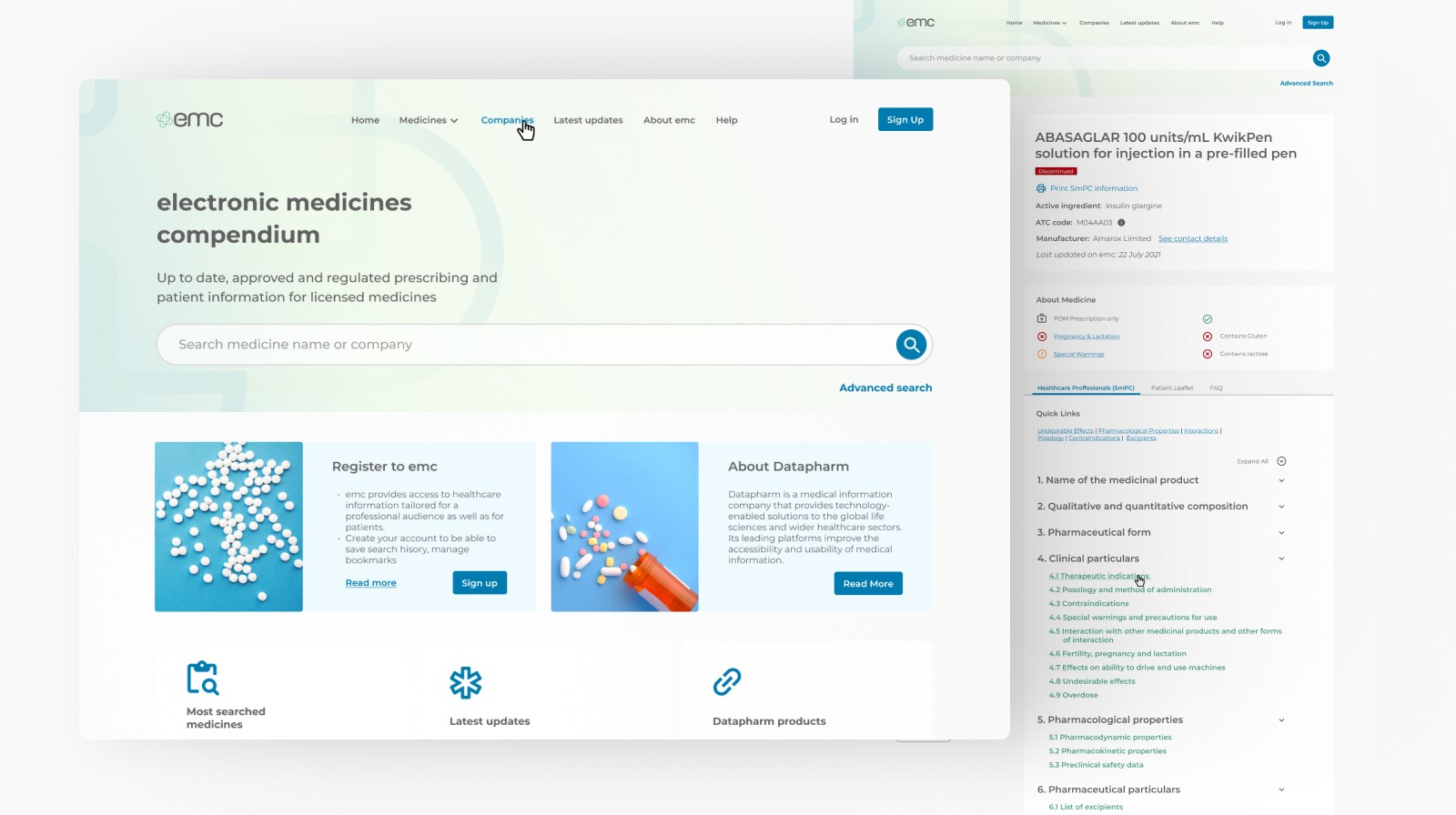
The Electronic Medicines Compendium (emc) is the UK's main source of regulator-approved medicine information, used daily by healthcare professionals and patients alike. The project was about making that information easier to find and use, without touching the accuracy and authority that makes emc worth trusting.
ROLE
PROBLEM
Medicine information is dense, highly regulated, and critical to get right. The platform made it harder than it needed to be: documents were long with no easy way to navigate them, search wasn't surfacing the most relevant results, and the interface wasn't working equally well for expert and non-expert users.
RESULTS
Finding specific medicine information got faster and required less effort.
Long regulatory documents became easier to navigate and scan.
The platform better served both patients looking for guidance and clinicians making prescribing decisions.
emc's position as a trusted, authoritative source was reinforced rather than undermined by the redesign.
The Challenge
emc serves two very different audiences at the same time. A patient looking up side effects and a hospital pharmacist checking contraindications have completely different needs, different levels of domain knowledge, and different tolerances for complexity. The old platform was built for one of those audiences and largely ignored the other.
The documents themselves added another layer of difficulty. SmPCs and patient leaflets are structured by regulatory convention, not by how people actually read them. Making them navigable without touching regulated content was a real constraint that shaped almost every design decision.
My Role & Approach
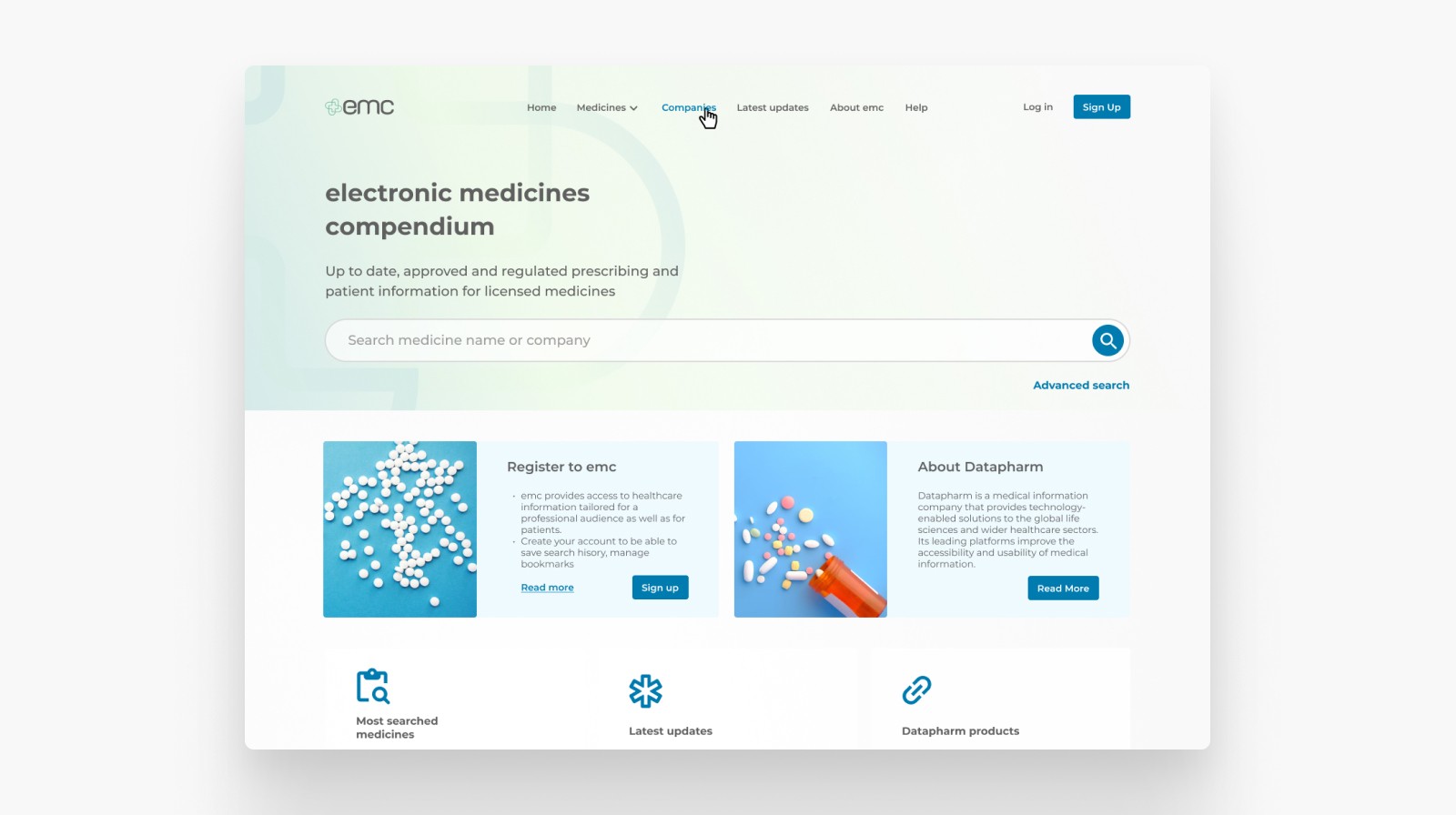
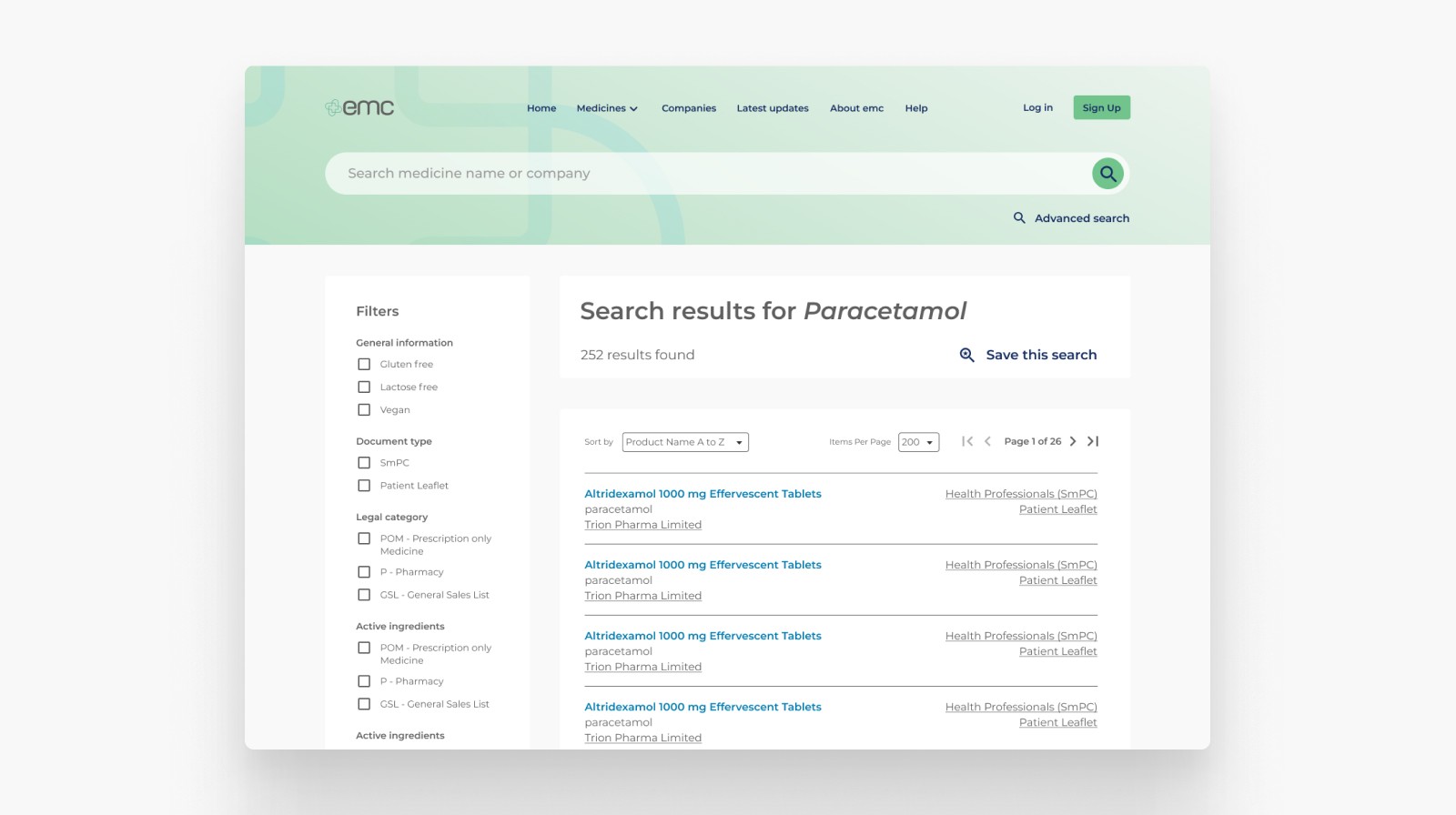
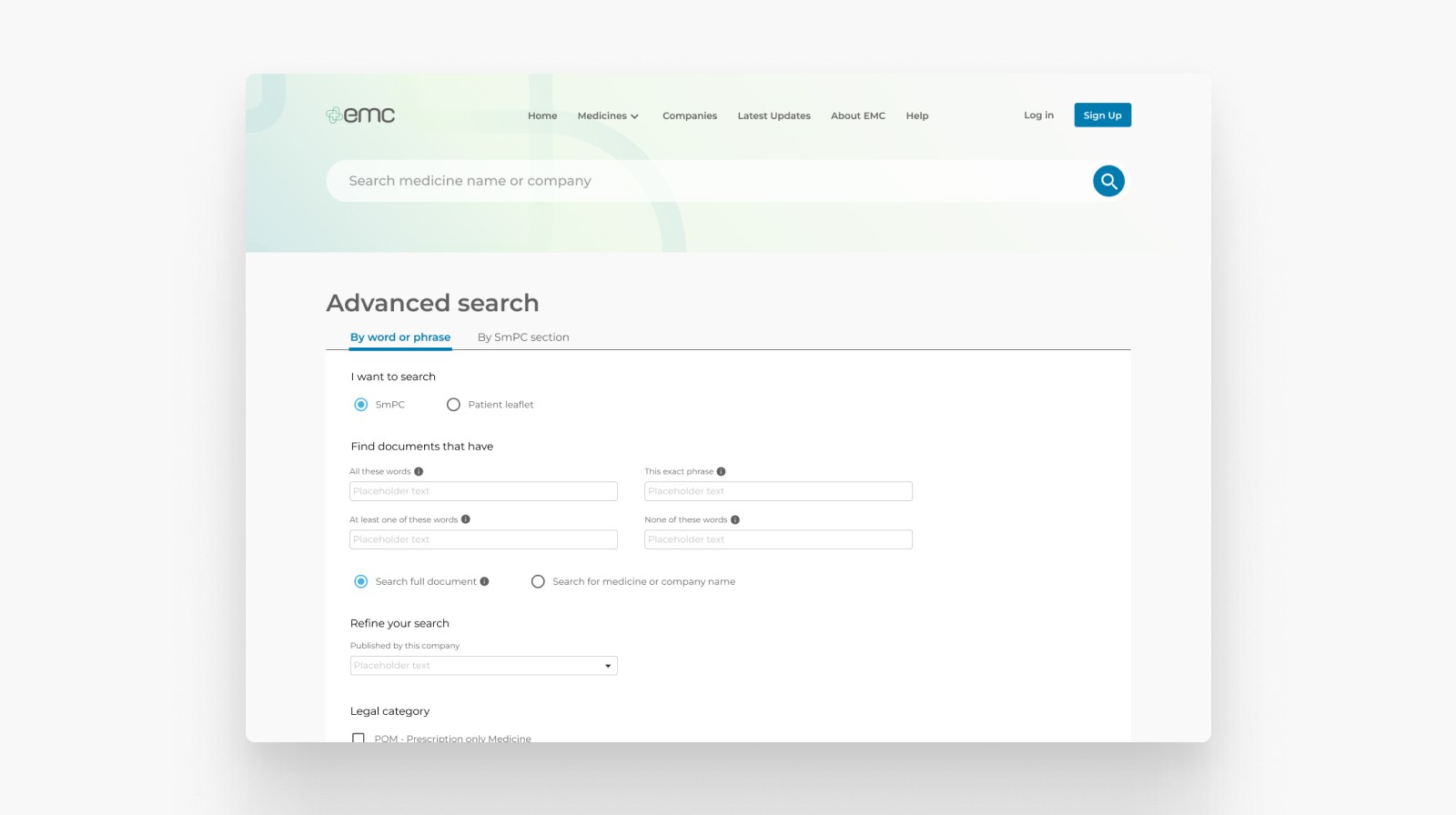
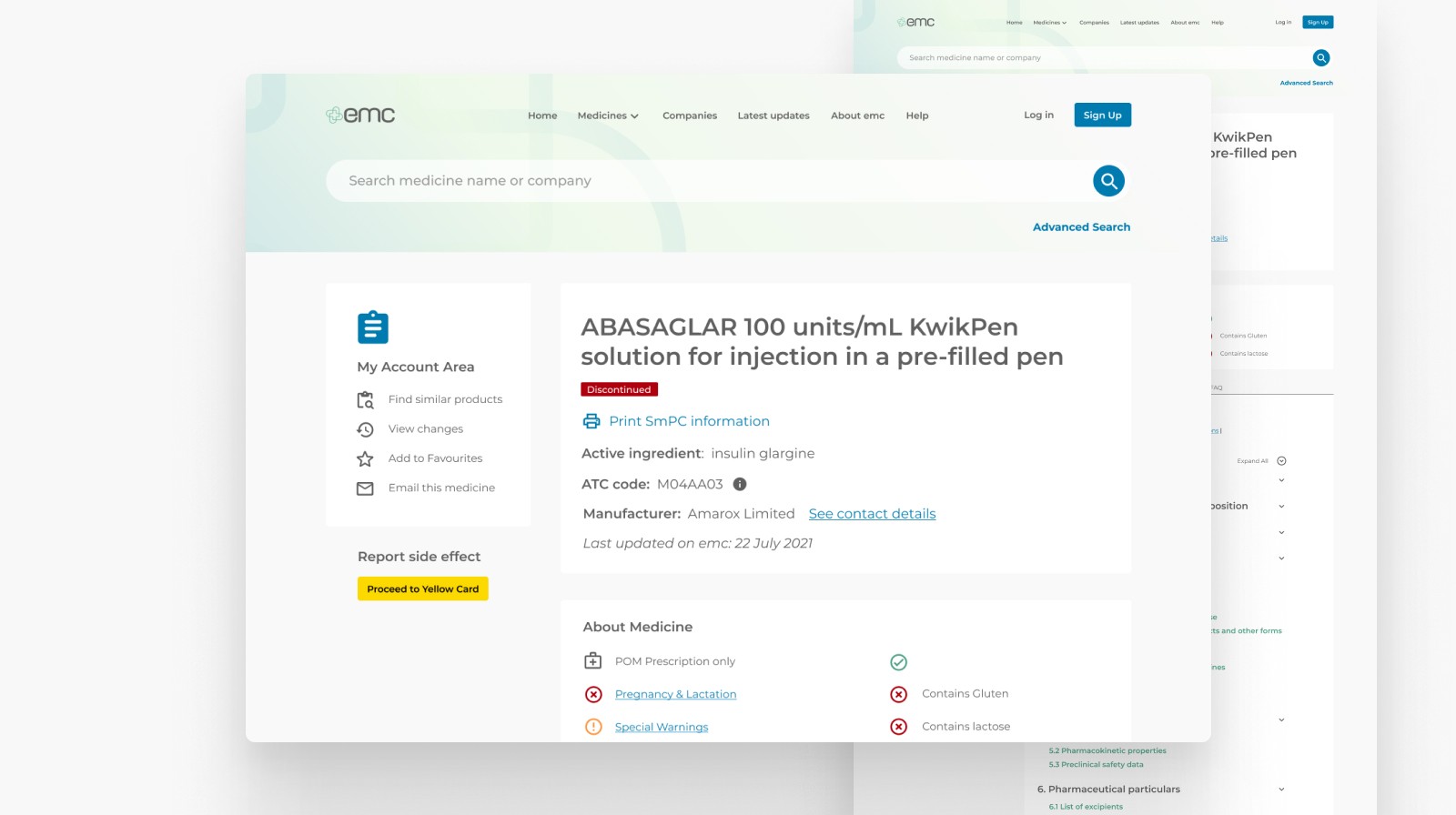
Most of the work came down to structure and navigation. I redesigned the search and filtering experience to get users to the right document faster, and introduced section anchors and scannable headers inside the documents themselves so people could jump to what they needed without reading everything first.
The dual-audience problem was the trickiest part. I needed layouts that worked for quick reference, a patient checking a single side effect, and for deep reading, a clinician working through full prescribing information. The solution wasn't to create two separate products but to make the same content work harder through better hierarchy and progressive disclosure. Accessibility ran through all of it, given how safety-critical the content is.
Outcome
The platform got faster to use without losing any of the accuracy it was known for. Users could get to the information they needed in fewer steps, documents were easier to navigate, and the platform worked for a wider range of people than it had before.