Cardio4D
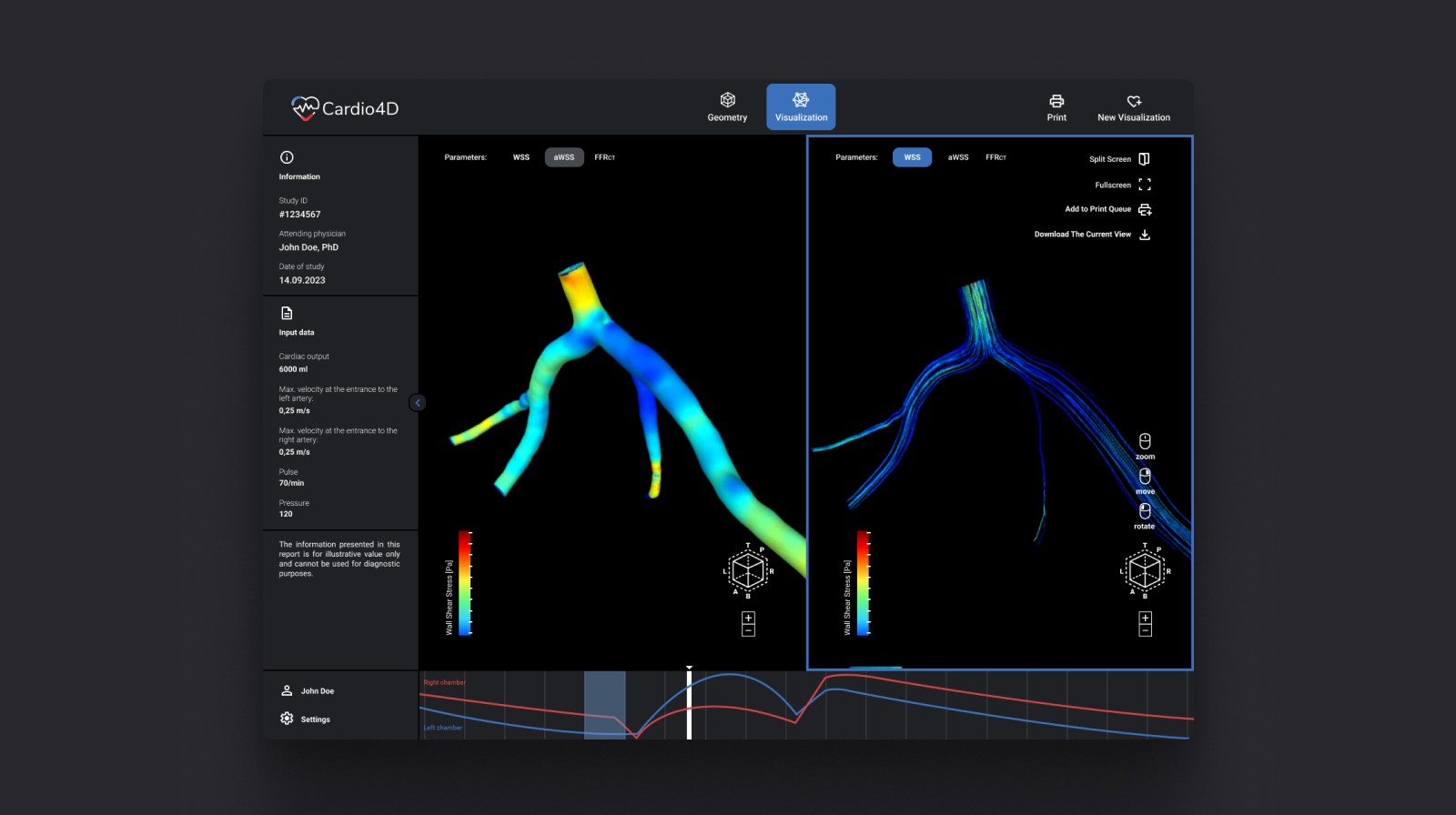
Cardio4D uses AI-driven simulations to model blood flow through cardiovascular structures from CT scan data. The idea is to give clinicians something they can actually reason from, turning static imaging into dynamic views that make it easier to spot risk before it becomes critical.
ROLE
PROBLEM
Cardiovascular CT scans contain a lot of clinically relevant data that traditional analysis struggles to surface. Blood flow behaviour, wall shear stress, flow anomalies, none of it shows up clearly in static images. Existing tools were either too technical for clinical workflows or too fragmented to support confident decision-making.
RESULTS
Clinicians could identify and interpret potential problem areas with more confidence.
Complex simulation outputs became actionable rather than just informative.
Specialists had clearer visual outputs to share and discuss across teams.
The platform provided a foundation for future AI-driven diagnostic tools.
The Challenge
The simulation data was rich and precise, but the people using it, cardiologists, radiologists, surgical planners, needed to act on it quickly and communicate findings to colleagues. Most tools in this space are built for the data, not the person reading it. The result is technically complete interfaces that are exhausting to use in practice. That was the problem to solve.
My Role & Approach
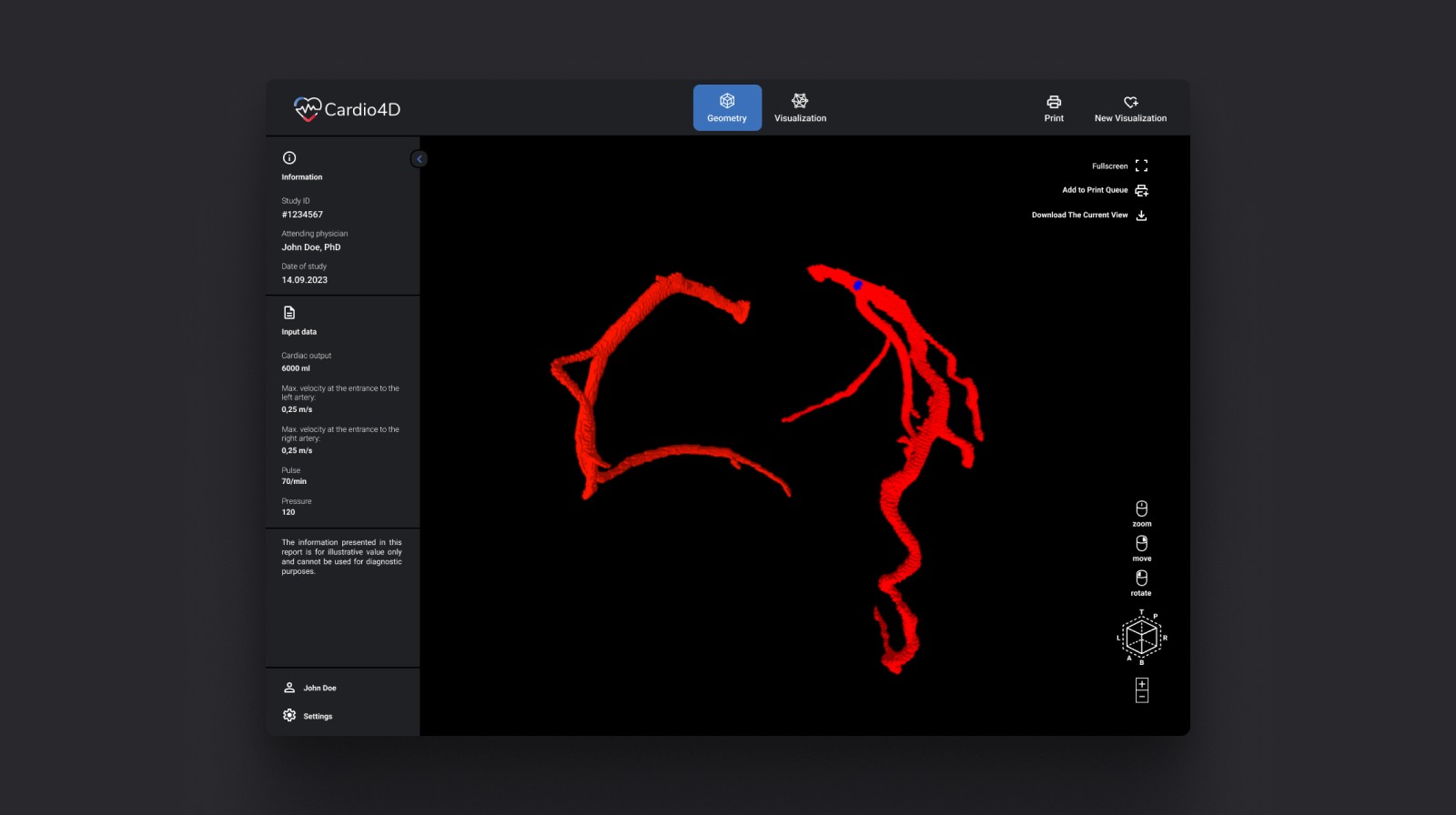
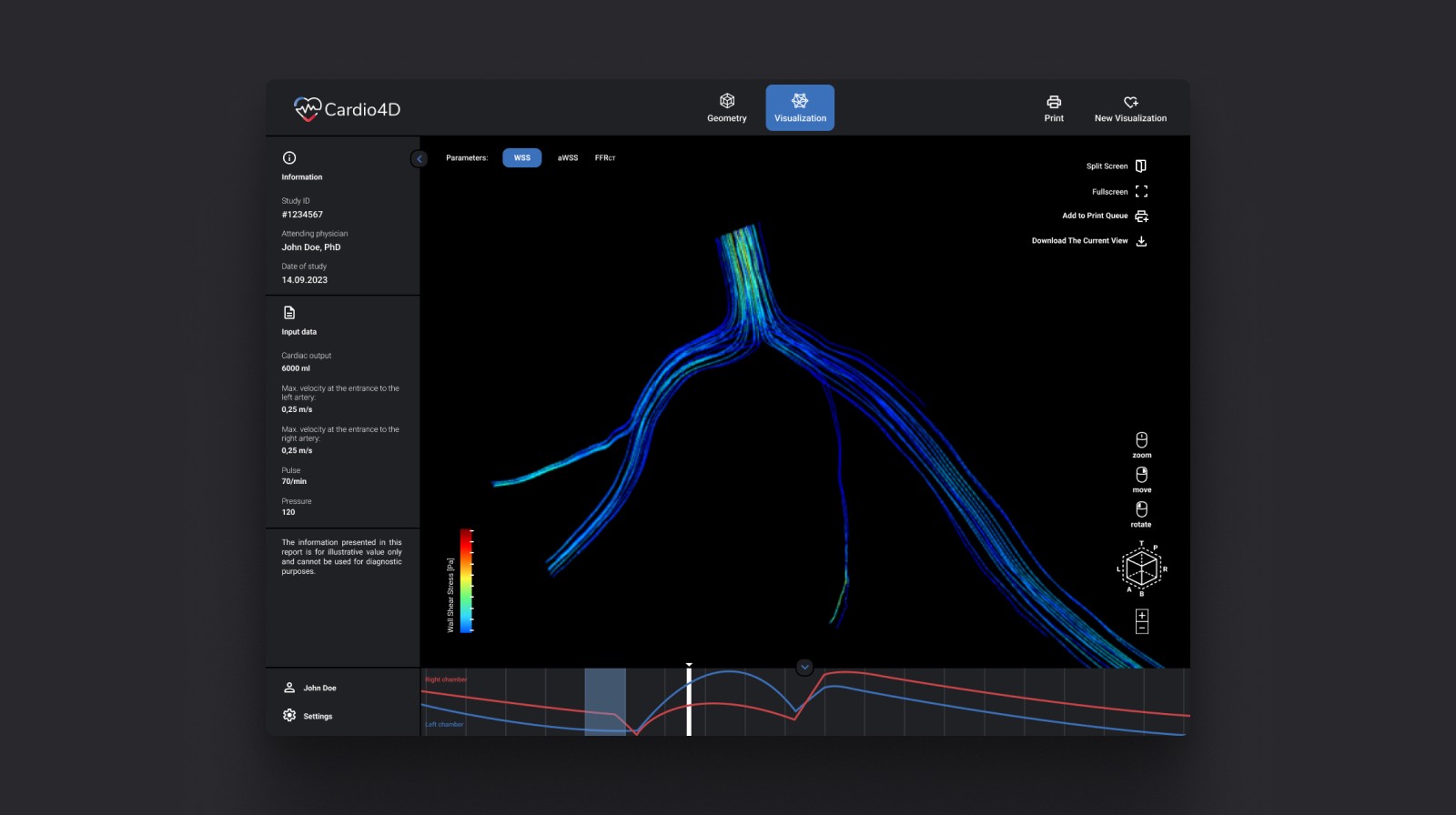
My focus was on making complex simulation data interpretable without losing the precision that makes it clinically useful. That meant spending a lot of time with the clinical and engineering teams early on, understanding which indicators, flow velocity, pressure gradients, wall shear stress, actually mattered for decision-making and which were noise.
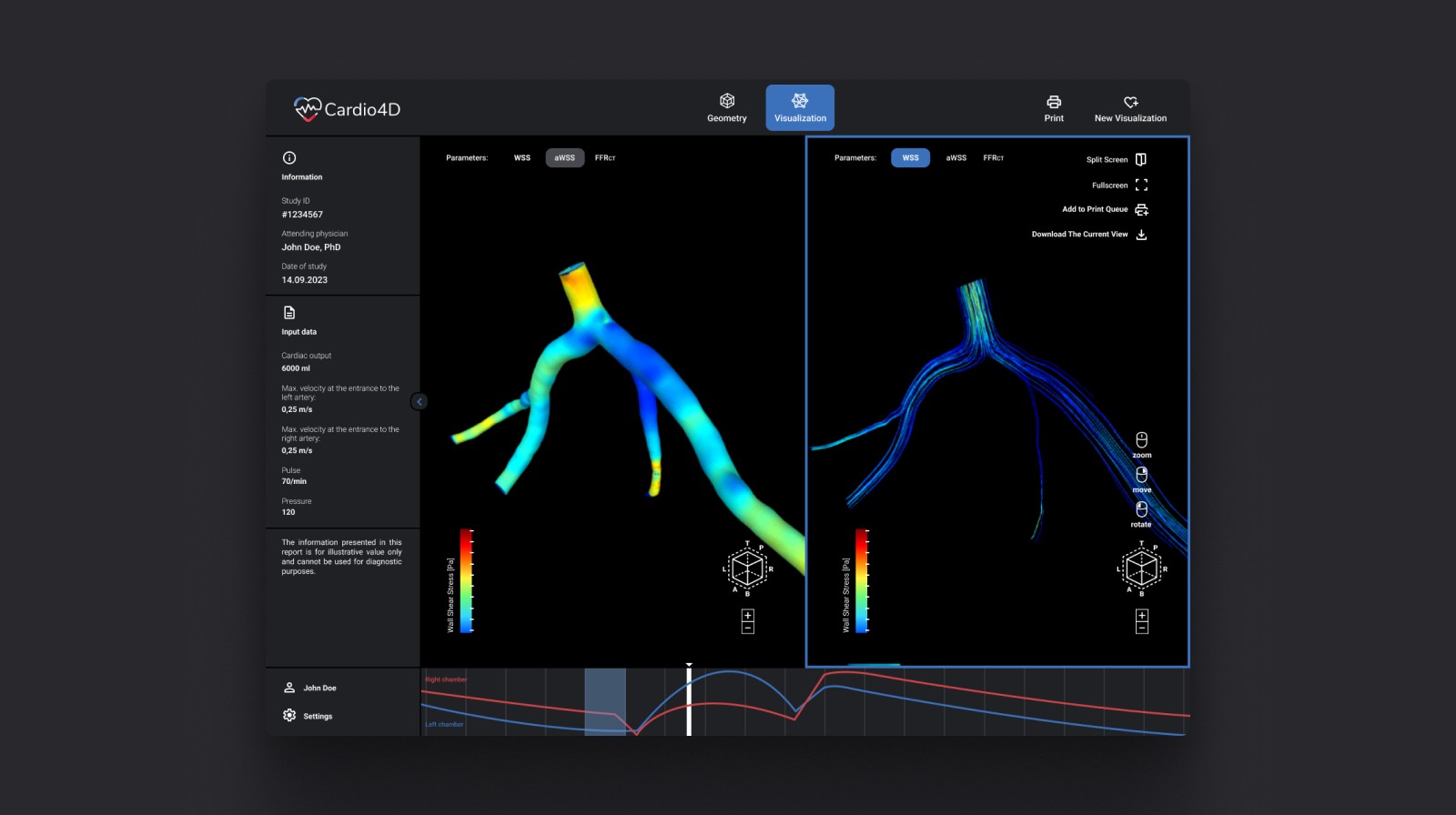
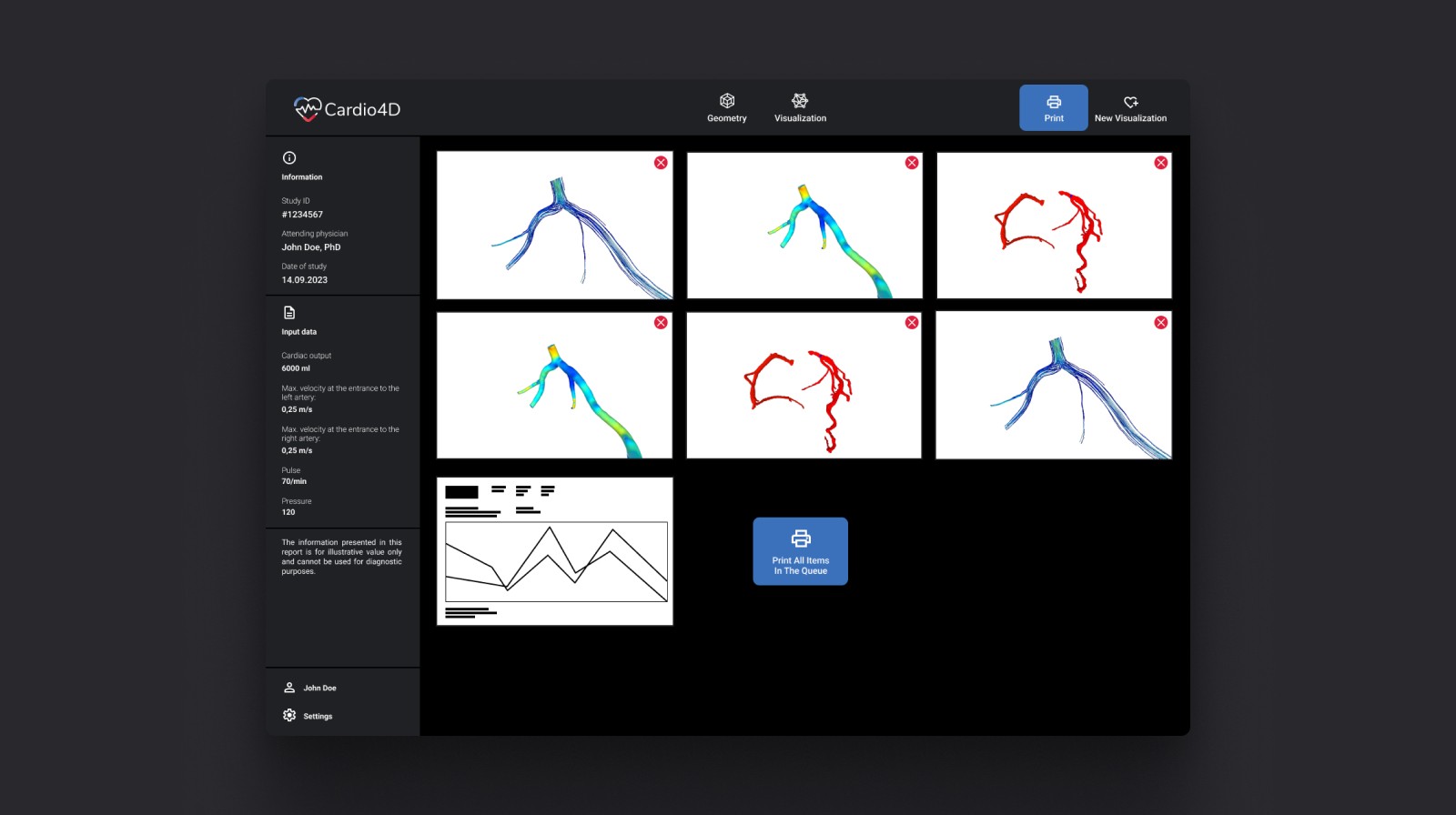
From there I worked on the visualisation layer, the 3D interaction model, and the comparison views. The 3D piece in particular required careful thinking around how doctors navigate spatial data: rotating, isolating regions, switching between parameters without losing track of where they were. I also designed the report export flow so findings could travel into clinical documentation in a format that made sense outside the tool itself.
Outcome
Cardio4D became something clinicians could actually use in a clinical workflow, not just a technically impressive tool that lived in a lab. Doctors got a clearer picture of cardiovascular risk, a better way to communicate findings with colleagues, and outputs they could drop straight into patient reports.